First-Time Presenter at TRB 2026 Annual Meeting
Excited to share my experience attending the TRB 2026 Annual Meeting as a first-time presenter! I had the honor of presenting research titled “Predicting Future Flexible Pavement Performance Using Long Short-Term Memory and Large Language Models” at the Applications of AI and Machine Learning in Pavement Engineering and Management session.
Abstract
Pavement performance prediction aims to forecast the future condition of pavement as accurately as possible, enabling proactive planning and optimized maintenance and rehabilitation (M&R) interventions. Pavement failure has traditionally been pre-determined during the design stage when performance indicators such as the International Roughness Index (IRI), cracking, and other distresses exceed predefined thresholds. While such projections may be useful during material-selection phases, pavements often experience varying deterioration patterns over their service life, making original forecasts less reliable.
To overcome these challenges, we propose to use advanced predictive models based on machine-learning techniques while leveraging text embeddings extracted from pre-trained models. This study specifically presents two IRI prediction models:
- A long short-term memory (LSTM) model for forecasting IRI during long-term deterioration
- An artificial neural network (ANN) model for predicting post-maintenance IRI
Our study further experiments with the semantic encoding power of different large language models, including transformer models, to provide numerical representations of raw maintenance logs. We show the importance of precise parameter selection for text-embedding models along with readily-available pavement-design input parameters passed to a customized ANN model for post-maintenance IRI prediction. The proposed framework supports integration of a wide variety of maintenance actions, including complex scenarios involving multiple maintenance applications.
We trained the models using data extracted from the long-term pavement performance (LTPP) database and obtained R² scores of 93% and 86% for IRI long-term deterioration and post-maintenance test datasets, respectively. These results underscore successful application of intelligent models across the pavement’s entire service life.
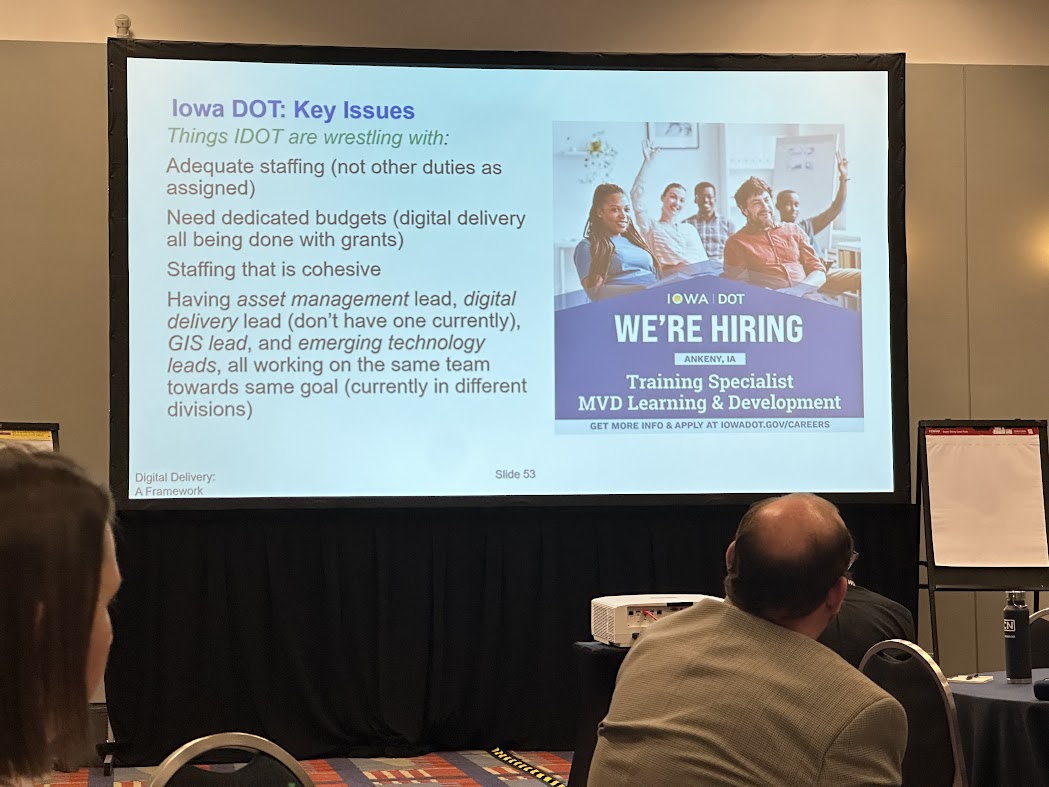
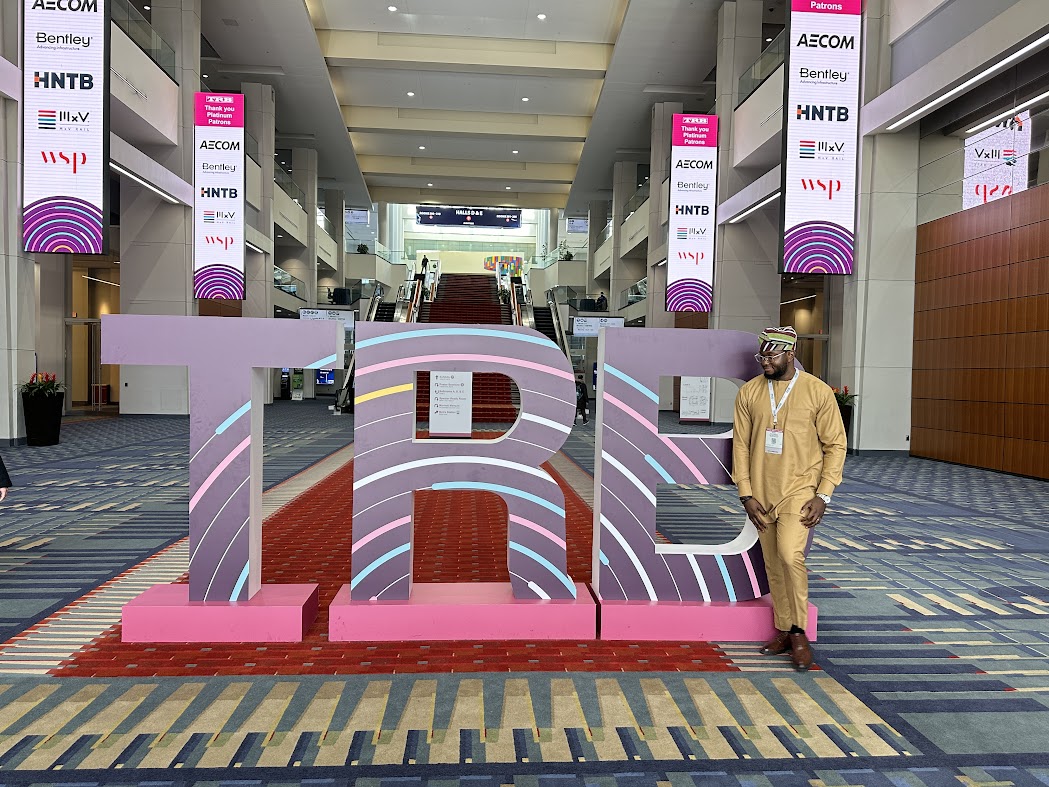
Conference Highlights




Acknowledgments
Special thanks to my major professor Dr. Halil Ceylan and co-authors:
- Dr. Berk Gulmezoglu
- Dr. Sunghwan Kim
- Dr. Yunjeong “Leah” Mo
- Abdullah Sourav
Their feedback and mentorship made this achievement possible.
Tags: #TRB2026 #PavementEngineering #MachineLearning #LLM #LSTM #AI #TransportationResearch